Romania for Digital Nomads: Best Cities, Costs and Where to Stay
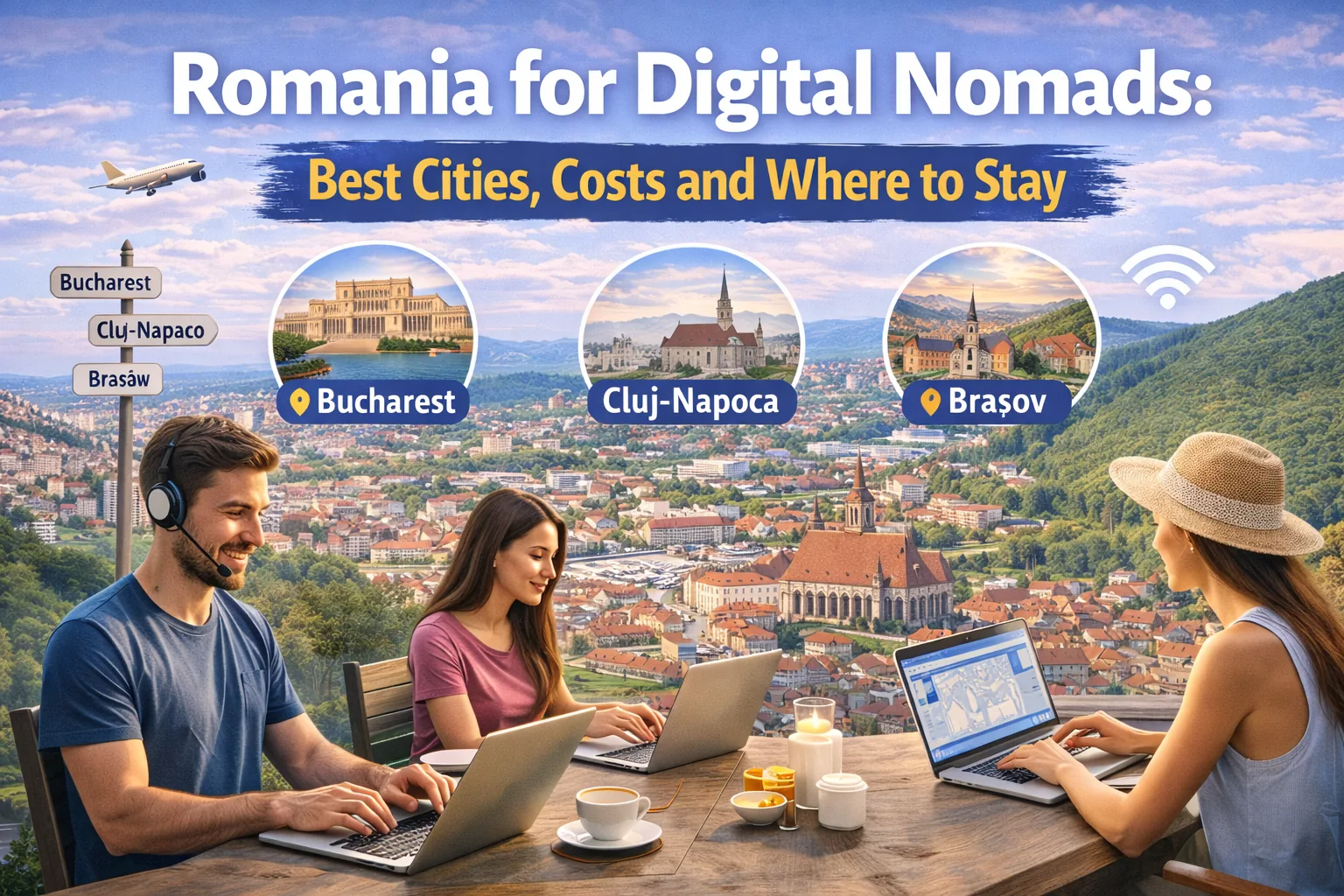
Romania has quietly become one of Europe's best destinations for digital nomads: fast internet, low cost of living, EU membership, excellent coffee culture and a quality of life that surprises everyone who arrives expecting less. This guide covers the best cities, realistic costs and where to find accommodation that works for remote workers.
Romania doesn't make most digital nomad shortlists — which is precisely why it works so well for those who discover it. It has some of the fastest internet speeds in Europe (consistently top-10 globally), EU membership with freedom of movement for European citizens, a cost of living roughly 40-50% below Western European averages, and cities with enough cultural density to sustain long stays.
Why Romania Works for Remote Workers
Internet Speed and Infrastructure
Romania has among the fastest and most affordable broadband internet in Europe — a legacy of heavy 2000s-era investment in fiber infrastructure. Average fixed broadband speeds consistently rank in the EU top 5. In all major cities, finding a coffee shop or coworking space with 100+ Mbps internet is routine, not exceptional. Mobile 4G coverage is reliable in urban areas and most tourist regions.
Cost of Living
A comfortable life in Cluj-Napoca or Timișoara — including a furnished one-bedroom apartment in a central neighborhood, food, transport and occasional entertainment — costs between €700 and €1,200 per month depending on lifestyle. Bucharest runs slightly higher. These figures are significantly below comparable quality of life in Lisbon, Barcelona or Prague, which have become expensive enough to push nomads further east.
EU Base
For EU and EEA citizens, Romania is a fully legal long-term base — no visa required, banking and healthcare access comparable to other EU countries. Non-EU citizens can stay up to 90 days in the Schengen area (Romania joined fully in 2024) and should investigate the specific visa options available.
Best Cities for Digital Nomads in Romania
Cluj-Napoca — The Tech Hub
Cluj is Romania's de facto tech capital — home to a thriving startup ecosystem, multiple coworking spaces, a large student population and a cosmopolitan atmosphere that welcomes newcomers. The coffee culture is sophisticated (specialty coffee shops are numerous and serious), the restaurant scene is diverse, and English is widely spoken in the professional community. The historic center is walkable and livable. Downside: rents have risen significantly in the last few years — still affordable by Western standards, but no longer the bargain Cluj was a decade ago.
Timișoara — The Livable Alternative
Timișoara offers a similar quality of life to Cluj at slightly lower costs and with noticeably less competition for apartments. The city's multicultural character (historically inhabited by Romanians, Hungarians, Germans and Serbians) makes it unusually tolerant and open for a Romanian city of its size. The tech sector is smaller than Cluj but growing. The city's position near the Serbian and Hungarian borders makes day trips to Belgrade or Budapest feasible.
Bucharest — Maximum Infrastructure, Maximum Noise
Bucharest has the most complete infrastructure of any Romanian city — best airport connections, most coworking spaces, widest restaurant variety, best nightlife. It also has traffic, pollution and a pace that not everyone wants. For nomads who need maximum connectivity and business networking, Bucharest is the obvious choice. For those who want to slow down and actually enjoy the place they're working from, Cluj or Timișoara are better fits.
Brașov and Sibiu — Quality of Life First
Both cities offer high livability with slower pace, easier access to nature (mountains are 30 minutes away), smaller but growing remote work communities and lower rents than Cluj or Bucharest. Coworking infrastructure is thinner but improving. Best for nomads who want a genuine work-life balance with mountains on weekends.
Accommodation Options for Long-Term Stays
For stays longer than a week, monthly furnished apartment rentals are significantly more economical than nightly rates. Platforms listing directly from Romanian landlords often offer better rates than international portals. For the first few nights while you find longer-term accommodation, guesthouses and boutique hotels in central neighborhoods work well — AI-Cazare.ro lists legally registered units with verified details throughout the country.
🔍 Cauți cazare verificată în România?
Pe AI-Cazare.ro găsești exclusiv unități autorizate, cu date legale afișate transparent. Rezervă direct la proprietar, fără comisioane ascunse.
Caută cazare acum →Do I need a visa to work remotely from Romania?
EU/EEA citizens: no visa required for any duration of stay, with full right to live and work. Non-EU citizens: up to 90 days without visa (Schengen rules apply from 2024). Longer stays require a residence permit or specific visa — consult the Romanian Immigration Office or a local immigration lawyer.
Is Romania part of the Schengen Area?
Yes, Romania fully joined the Schengen Area in 2024. This means free movement across borders with other Schengen countries for EU/EEA citizens and the standard 90/180 day rule applies for non-EU visitors.
What is the best neighborhood to stay in Cluj or Bucharest?
Cluj: Centru or Grigorescu for walkability. Bucharest: Floreasca or Dorobanți for quality and calm; Centrul Vechi for nightlife access.
Comentarii cititori
Părerea celor care au citit acest articol.